
Flatbed And Step Deck
At a Glance
Open-Deck Equipment
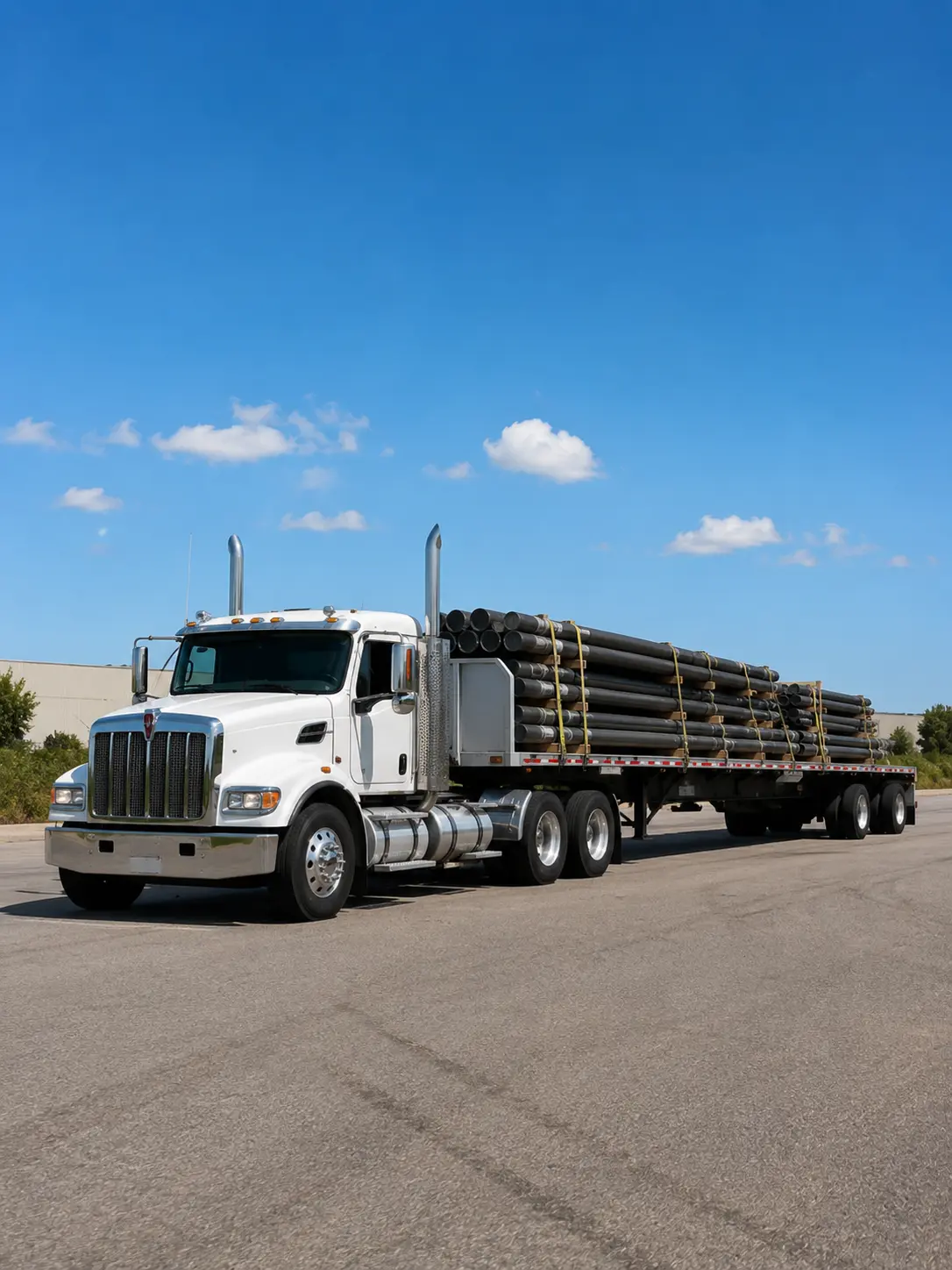
Flatbeds have an open deck without permanent sides or a roof.
Step Deck Design
A step deck incorporates upper and lower deck levels, providing a lower deck for freight that may be too tall for a standard flatbed configuration.
Best For
Freight whose dimensions, loading method, or handling requirements are suited to open-deck transportation.
Need Dispatch Support?
Tell us about your truck, equipment, preferred lanes, and operating goals.
Dispatch Support for Open-Deck Operations
Flatbed and Step Deck freight requires careful attention to equipment type, cargo dimensions, weight, loading requirements, and any special handling instructions associated with the shipment.
Prime Logistics helps carriers review open-deck freight opportunities around their equipment capabilities, preferred lanes, availability, and operating preferences.
Common Freight Applications
Machinery And Equipment
Open-deck equipment can accommodate suitable machinery, equipment, and freight requiring side or overhead loading.
Construction And Industrial Freight
Flatbeds are commonly considered for appropriate building materials and industrial freight based on load specifications.
Taller Freight Options
The lower deck of a Step Deck can accommodate certain taller loads that may not be suitable for a standard flatbed.
Request Dispatch Support
Tell us about your operation and our team can discuss how Prime Logistics may support your freight-search and dispatch needs.
Frequently asked questions
A standard flatbed has a level open deck, while a step deck has an upper and lower deck. The lower deck can provide additional height clearance for certain loads.
Yes. Equipment type and relevant load requirements can be considered when reviewing opportunities.
Handling requirements can vary by load and should be reviewed before accepting an opportunity. DAT's current flatbed load tools specifically support handling attributes such as tarps, chains, and coil racks.
Yes. The carrier retains control over the final load decision.